

How do I improve my E-commerce website’s conversion rate? A Wolfgang Digital study shows that just 20% of visitors to E-Commerce stores landed directly on the site. An overwhelming 60% of traffic comes from Google.
To put this in perspective, these are visitors who may have not transacted with on your site earlier. Capturing their attention, building trust, and converting them can take a lot of time and resources. Not surprisingly then, the average conversion rate on eCommerce is pegged at less than 2.50%.
Interestingly, the conversion rate on the top 10% of eCommerce sites is estimated to be over 11%. A major driver of this higher conversion rate is the credibility and loyalty that comes with being a well-known brand.
But that is not all. Let us take a look at some other minor tweaks to an eCommerce site that could drive higher conversions.
Table Of Contents:
1. Marketing automation
2. Focus on visuals
3. Reach all your target demographics
4. Remove buyer uncertainties
1. Marketing Automation
One of the key findings from the Wolfgang Digital study is that nearly 20% of conversions happen at least 12 days after the visitor landed on your site. Also, same-day purchases occurred in only 60% of cases.
While on-page factors may contribute to conversion in the 60 percent of cases, marketing automation plays a defining role for the rest.
The objective of a marketing automation process is to uniquely classify each of your visitors by their interests and target them with laser-focused marketing campaigns.
Amazon, for instance, uses the power of big data to analyze your purchasing history with other customers to predict a list of products you may be interested in buying. For instance, if you are an avid reader, Amazon may process the genres and authors you read to recommend a list of books you may be interested in.

Purchasing a book may not always indicate interest in a genre or author. In order to further improve its marketing automation algorithm, Amazon nudges its customers to rate and review the products they purchase. This is used to improve the recommendation engine for future campaigns.

These automation strategies may not work if the visitor is new to your site or is not logged in. In such cases, eCommerce sites may make use of google remarketing to reach out to your visitor with revised offers or recommendations.
In addition to marketing automation, it is also a good idea for eCommerce businesses to invest in eCommerce sales automation. One study found that 80% of businesses are looking for AI based customer experience and sales management solutions by 2022.
Subscribe to our newsletter to stay updated on the latest in B2C marketing
2. Focus on visuals
Nearly 40% of traffic to eCommerce sites comes from organic Google search results. SEO is thus a very important part of success in this industry. Given the importance of text in SEO, a lot of online stores tend to offer lengthy descriptions on their sites.
This can bring down the conversion rate on your pages. For better performance, your site design should focus on visuals. This is especially true for fashion and lifestyle based products where visual appeal plays a major role in generating interest. LVMH’s fashion store 24Sevres has very little text content on its product pages and all the selling is done through visuals like this one.
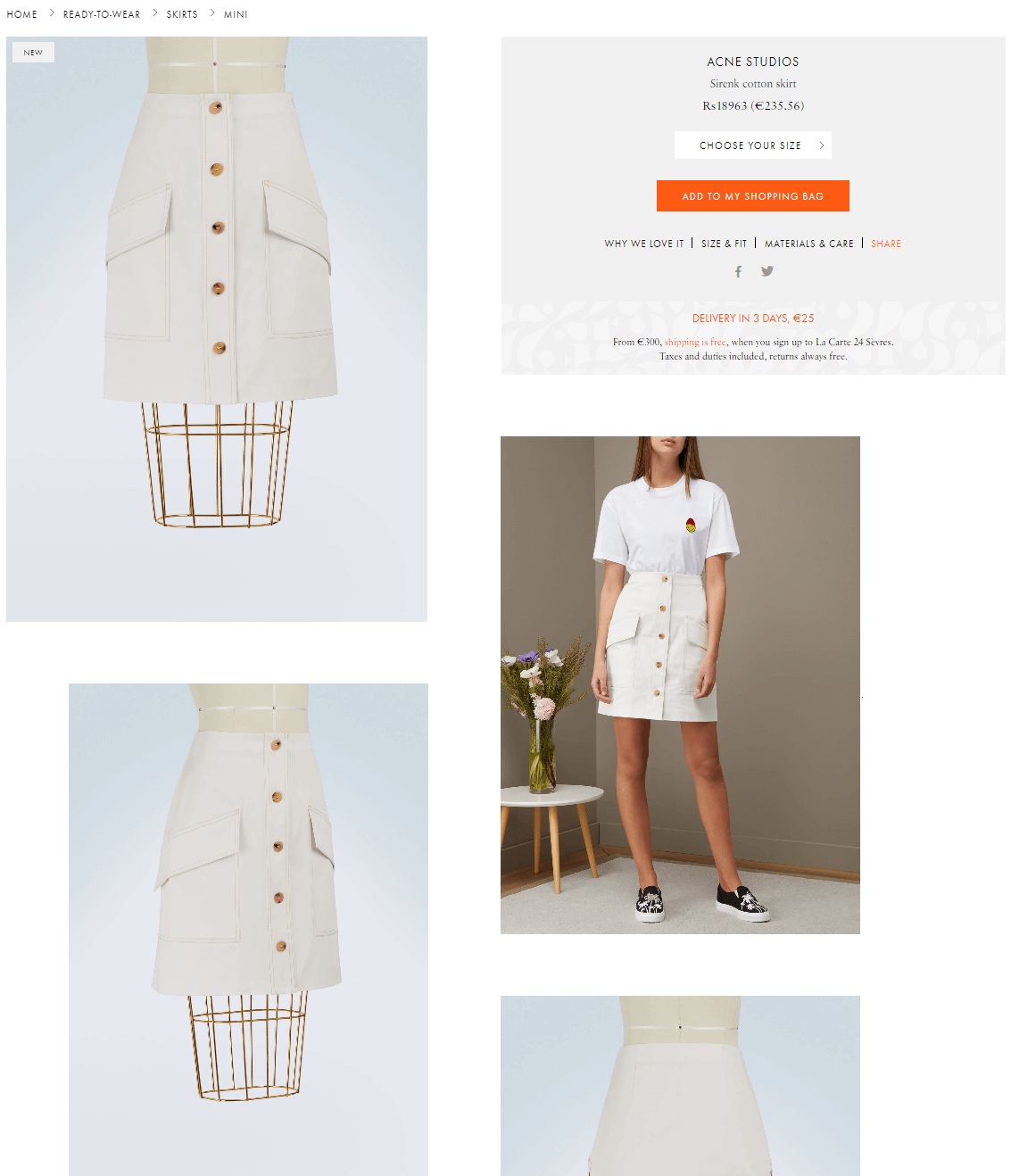
You may compensate for the lack of text by including helpful ALT text for your images. You may also supplement your visuals with exhaustive descriptions that appear upon hovering your cursor over these images.
3. Reach all your target demographics
Targeted messaging is critical for high conversions. However, limiting your targeting to a single demographic or buyer profile can not only bring down the size of your target group but can also reduce conversion rates from other potential buyers.
eCommerce stores that make use of product images provided by the supplier often see low conversion rates because of this. For instance, a site targeting Indian buyers may fail to connect with their target audience if the product images have white models.
There are two reasons why this is important. Firstly, conversion is influenced by a prospective buyer’s interest and desire in the product. Without targeting their unique characteristics, it may not be possible to build the connection that is so essential to conversion.
Secondly, some product categories work differently on different audiences. For instance, the preferred shades for lipsticks vary among various races. It is important to connect with each of these different buyer groups to be successful in conversion.

4. Remove buyer uncertainties
This is perhaps the most important factor contributing to higher eCommerce conversion rates. A customer needs to be absolutely convinced about the value of the product for them to proceed with the purchase.
This is difficult in the face of uncertainties – Would the shoe fit me? Will the dress look good on me? Would the adapter work on with my gadgets? The buyer would need answers to such questions before they can be convinced.
Amazon and its sister sites like Zappos have ‘Customer Q&A’ sections where prospective buyers can get their questions answered by the community as well as the sellers. The answers to these questions are public and are also accessible to other prospective buyers.
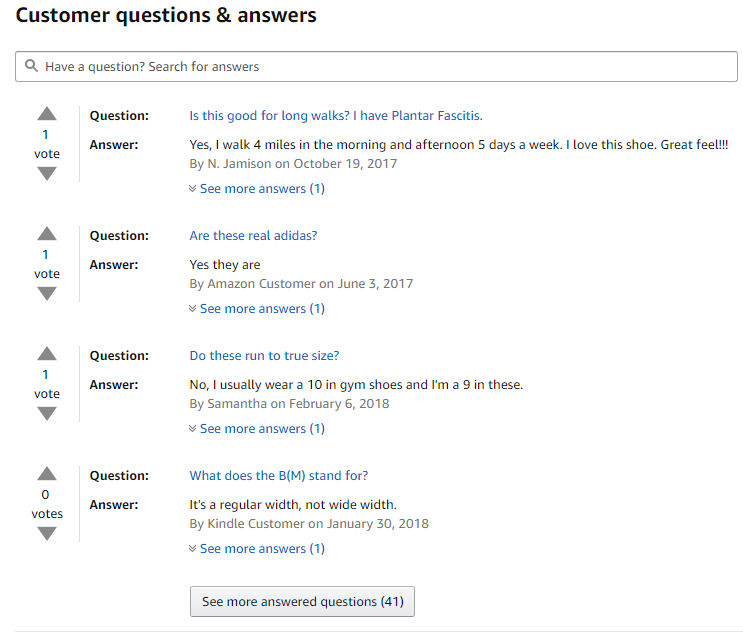
Customer Q&As can work on all kinds of sites and are thus particularly useful for horizontal stores that sell multiple categories of products.
Niche eCommerce stores should also look at dedicated tools that can assist in the customer decision journey. For instance, a store that sells spectacles online may build a simulation tool that lets buyers try on various glasses before they pick the right one.

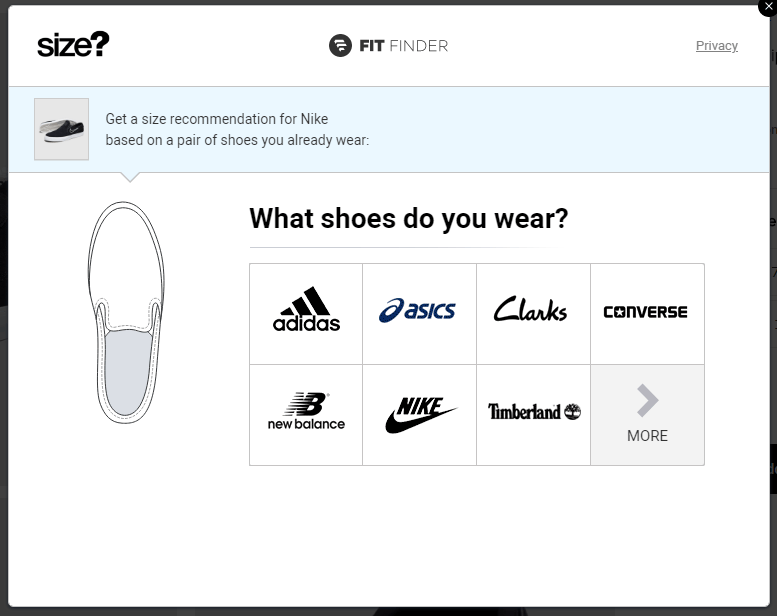
Here is another example of a site that uses an online tool to identify the right fitting shoe for the buyer. The tool does this by asking the buyer to input details about the shoes they own.
Conclusion
As a general rule of thumb, a buyer needs to be provided all the information he needs to make a buying decision, along with all the details that can establish the seller’s credibility. The tweaks suggested above should go a long way in establishing these factors and thus improving conversion rates.
Download Impact Story – See how Yayvo, Pakistan’s largest e-commerce company, increased its conversion by 8%