



Customer Profile
Zivame is one of India’s largest lingerie marketplace functioning in both online and offline space. Founded in 2011, the company has so far raised $46 million in venture capital and currently caters to 1.5 million+ active users on their online properties. Initially, the company was totally into online retailing but forayed into physical space in mid-2016.
During the time of publishing this post, Zivame had 22 open physical stores spread across India and they are planning to cross 100 by next year.
The Objective
Drop-offs from the product page is a ubiquitous challenge across all e-commerce businesses. Users come to the platform, search, visit a product page or a couple of them, and then exit without making a transaction.
Now, Zivame did not want to live with the wildly optimistic hope that, once having exited the website, users would return on their own and make the purchase.
However, the problem is that the bulk of MAU for any e-commerce business, which is not totally app-based, is anonymous. You could target known users via mobile or email, but for anonymous ones, the only medium at our disposal is on-site messaging.
Now, creating a personalized, engaging experience, via on-site messaging is easier said than being done. Tying the behavioral history of the user across web and mobile, and incorporating it into your messaging in a live setting is supremely difficult.
So, Zivame used WebEngage Journey Designer to address it.
The WebEngage Effect
Zivame created a Journey that targeted anonymous users, who dropped off from the product page, via two channels:
- On-site notification
- Web Push
The lifetime of the journey is 4 days.
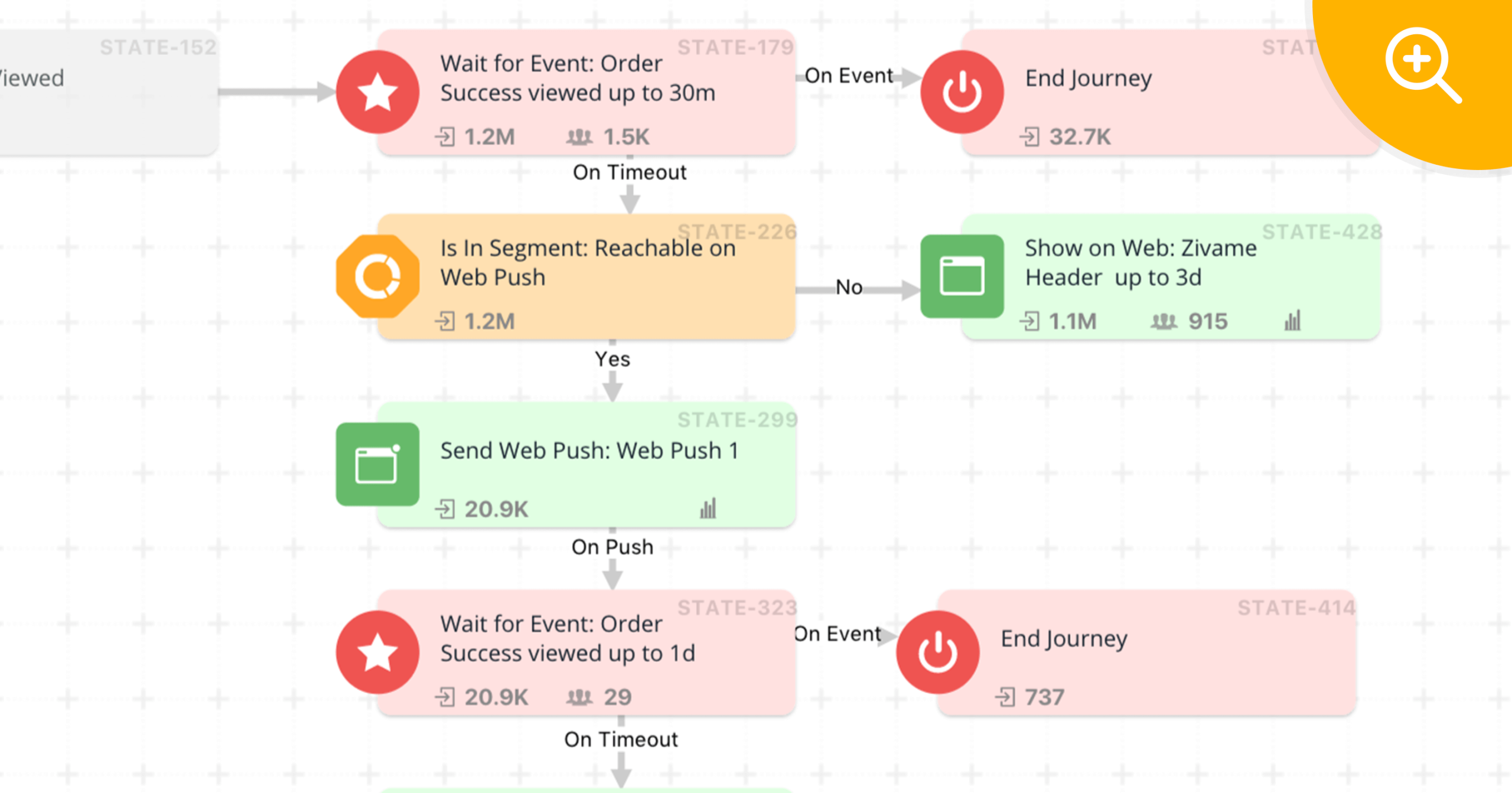
If you found it hard to make sense of the above journey, the following is a simple whiteboard diagram.
How does the journey work?
The Journey first checks, for 30 minutes, whether or not the user converts organically, post-viewing the product page. If she doesn’t, then the journey triggers a message. The message is to be sent via Web Push – so it checks for the user’s reachability on the channel. If the user is not reachable on Web Push (has disabled web push notifications manually), then the journey triggers an on-site notification.
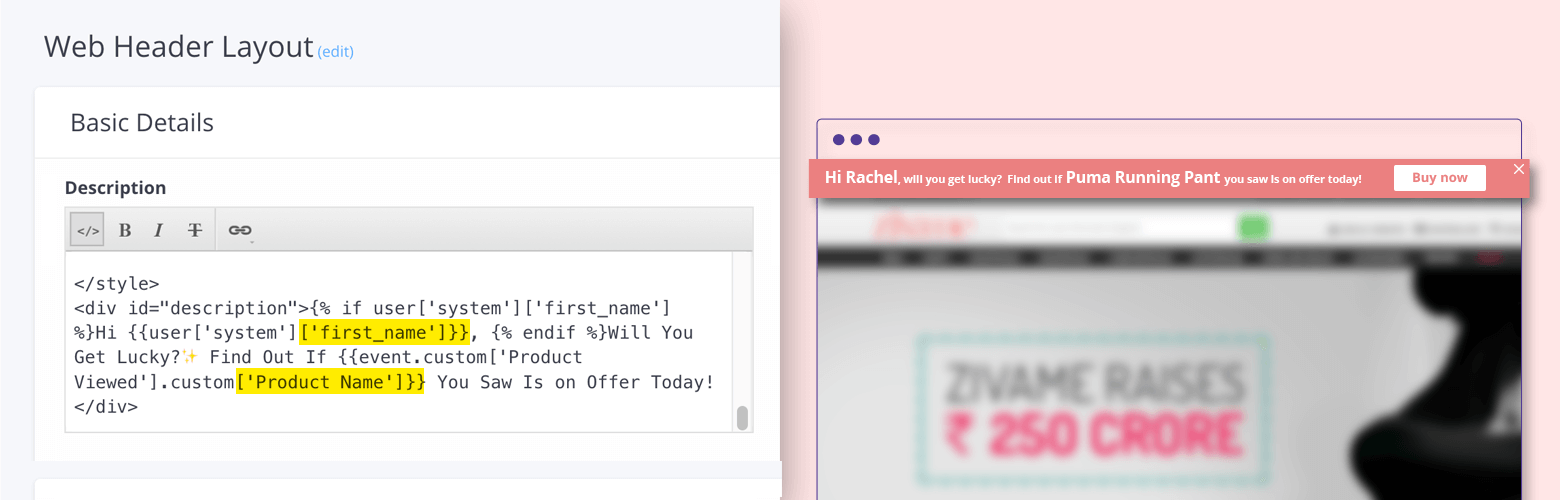
A highly personalized on-site notification is then triggered by WebEngage using attributes from the user’s behavioral history (viewed_product event) and her profile details. For example, let’s assume that the user viewed Puma Running Pants. Thus, the user will be prompted with the notification shown below –
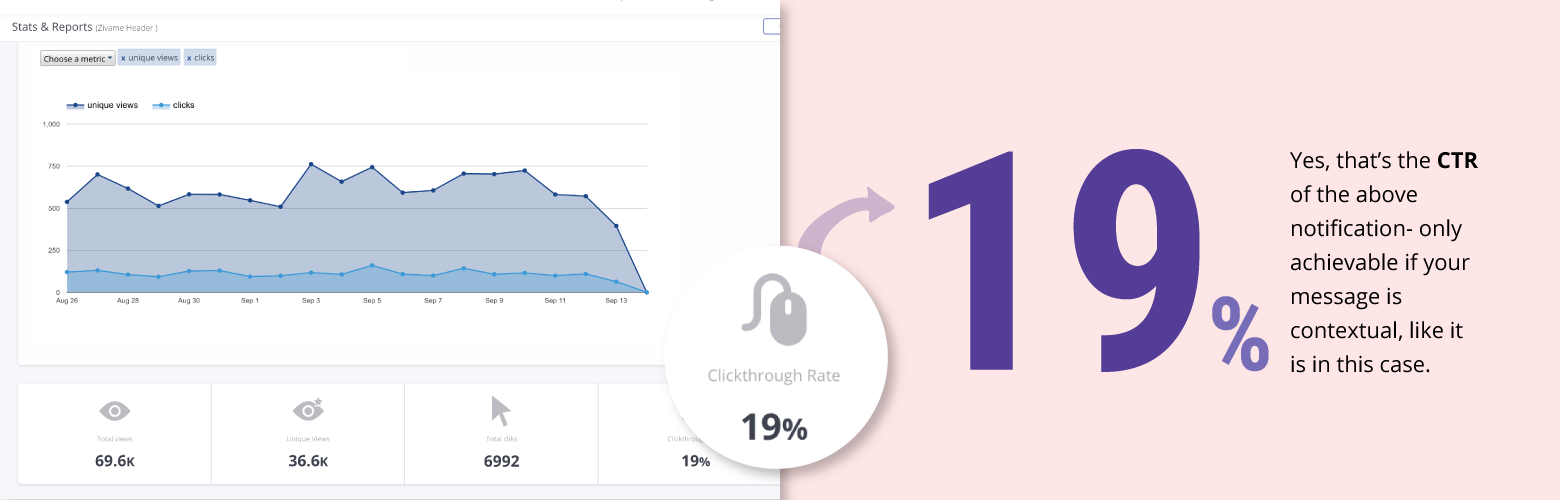
While you’re at it, here’s the backend view of the click-through-rate performance of the personalized on-site notification:
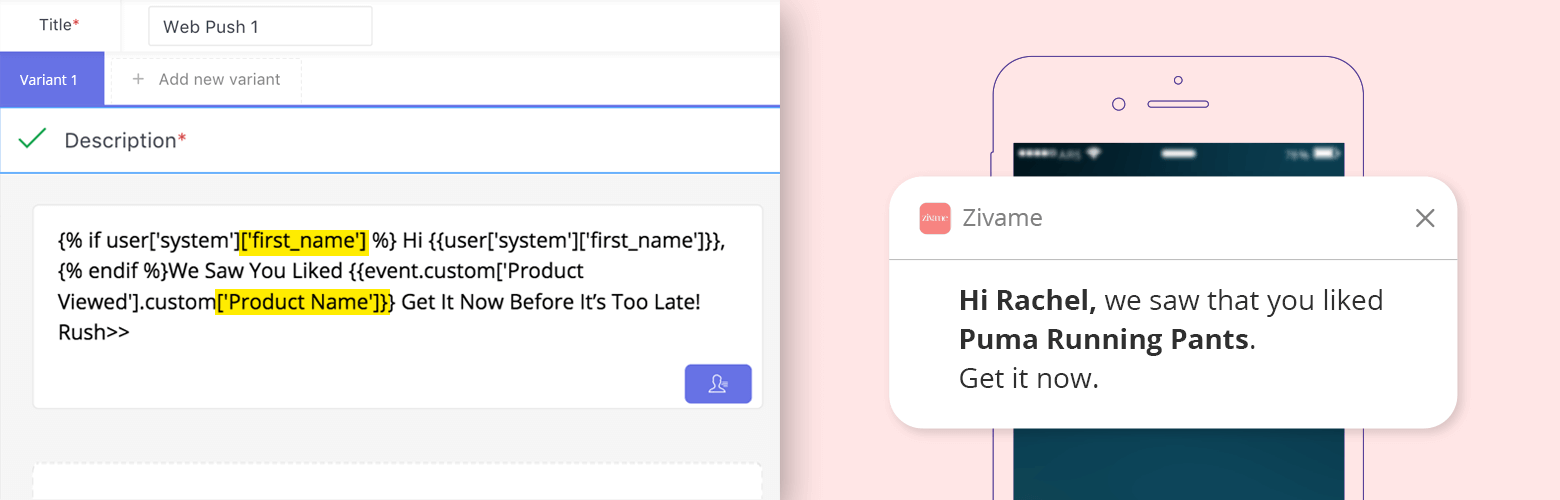
Now, if the user doesn’t convert post viewing the notification, then a series of web push notifications will be triggered by the journey. Each web push message contains a highly personalized copy. This is intended to make the user purchase the product that she has viewed.
So, if she doesn’t purchase post viewing the first notification, then she is nudged with the following web push.
If she yet doesn’t convert, then the Journey triggers this:
This is the final one and we end the journey whether or not the user converts. We cannot risk the user unsubscribing. (once the user unsubscribes we lose web push as a channel forever)
Each notification is timed at a gap of 2-3 days so that the user doesn’t feel bombarded.
The Result
The journey led to an uplift of 20% in the conversion.
As it is apparent from the journey, 32.7k users converted on their own without any intervention whatsoever.
With the effect of Journey designer, 6408 more users converted, which is 19.6% of 32.7k. In other words, Journey Designer led to a 19.6% uplift in conversion. (Follow the marker in the Journey to see the number of users who converted via Web push 1 and Web push 2.)
If you multiply this uplift with Zivame’s AOV then it amounts to millions extra to Zivame’s top line. Now, this Journey has been running for less than a month so it looks like there’s a lot of money on the table for Zivame to grab. And mind you, this is just one such journey.
Also Read: Best Practices in User Engagement for Online Marketplaces